

If you own or manage a hotel in Nepal, one of the smartest investments you can make is having your own website and a strong SEO strategy. While many hotels rely heavily on online travel agencies (OTAs) like Booking.com and Agoda to fill their rooms, depending entirely on these platforms means paying commission on every booking and competing with hundreds of similar hotels.
Your website is the only property on the web that is entirely yours, and SEO allows guests to find you when searching for places to stay through Google, Google Maps, and also through intelligent search engines. The combination of these elements constitutes an effective marketing tool that drives more bookings to you directly, lowers the importance of OTAs, and builds your hotel’s reputation.
Whether you operate a boutique hotel in Pokhara, resort in Chitwan, guest house in Nagarkot, or business hotel in Kathmandu, making a smart investment in SEO will ensure your hotel gets to potential customers before they make their booking through your competitor. In this guide, we will explain what hotel SEO is, why it is important in 2026, and how it can boost your hotel’s performance.
Quick Answer: What Is Hotel SEO in Nepal?
Hotel SEO in Nepal is the practice of optimizing your hotel’s website, Google Business Profile, and online content so that travelers searching for places to stay, whether in Pokhara Lakeside, Thamel, or Chitwan, find and book your property directly, instead of exclusively through OTAs like Booking.com or Agoda. It combines technical fixes, local search optimization, content, and increasingly, visibility in AI-powered search tools.
Why Does Hotel SEO Matter More Than Ever in Nepal?
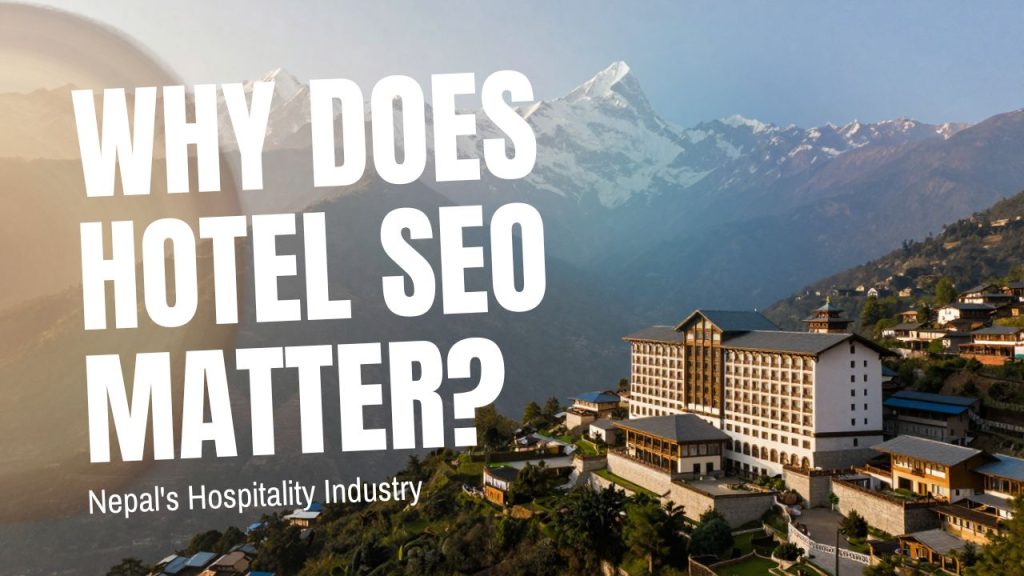
Nepal’s tourism industry continues to grow every year, bringing more hotels, resorts, guesthouses, and homestays into the market. While this creates more opportunities for tourism businesses, it also means travelers have more choices than ever before. If your hotel isn’t easy to find online, potential guests are likely to book with a competitor instead.
At the same time, the way people search for accommodation has changed. Travelers no longer visit a single booking website and make an instant decision. They compare hotels on Google, explore Google Maps, read reviews, browse photos, visit hotel websites, and increasingly ask AI-powered search tools for recommendations before making a booking.
Here are some of the biggest reasons hotel SEO has become essential:
- Reduce Your Dependence on OTAs
Online travel agencies can help fill your rooms, but every booking comes with commission fees that reduce your profit. By increasing direct bookings through your website, SEO helps you keep more of your revenue while building a direct relationship with your guests.
- Reach Travelers Before Your Competitors
When someone searches for term like “budget hotel in Pokhara,” “hotel near Thamel,” or “best resort in Chitwan,” you want your hotel to appear among the first results. A strong SEO strategy increases your visibility where travelers are actively looking for accommodation.
- Build Trust Before Guests Contact You
Before making a reservation, most travelers check Google reviews, photos, amenities, location, and website. Appearing prominently in search results with accurate information and positive reviews helps build confidence and encourages direct bookings.
- Mobile Search Is Now the Standard
Most hotel searches happen on smartphones. Whether someone is planning their trip months in advance or looking for accommodation after arriving in Nepal, they expect a website that loads quickly, works smoothly on mobile devices, and makes booking simple.
- AI Search Is Changing How Travelers Find Hotels
Many travelers now ask questions like “Where should I stay in Pokhara?” or “Which hotel is best for families in Kathmandu?” using AI-powered search tools. Hotels with clear, trustworthy, and well-organized information are more likely to appear in these recommendations, giving them another opportunity to attract direct bookings.
Hotels that invest in SEO today aren’t just improving their Google rankings; they’re making it easier for travelers to discover, trust, and book their property across every stage of the modern travel journey.
How Travelers Find Hotels in 2026
The way travelers book hotels has changed. Instead of searching on a single booking website, most people now compare hotels across multiple platforms before making a decision.A typical booking journey looks like this:
Google Search → Google Maps → Reviews → AI Search → Hotel Website → Direct Booking
Your hotel needs to be visible at every stage of this journey.
Google Search
Most travelers begin their searches with “budget hotel in Pokhara”, “hotel near Thamel”, or “best resort in Chitwan.” If your hotel doesn’t appear in search results, potential guests may never discover your property.
Google Maps and Reviews
Nowadays before booking, travelers usually check your location, ratings, photos, amenities, and recent guest reviews on Google Maps. Due to which a complete and well-managed Google Business Profile helps to build trust and increases your chances of attracting direct bookings.
AI-Powered Search
Instead of just checking in google nowadays many travelers are asking AI tools questions like “Where should I stay in Pokhara?” or “Which hotel is best for families in Kathmandu?” AI platforms recommend hotels with accurate business information, helpful content, and a strong online presence.
Your Website
Once travelers find your hotel, your website should be able to make easy for them to explore your rooms, amenities, and pricing, while providing a seamless booking experience that encourages direct reservations. A well-designed, user-friendly website plays a key role in turning visitors into guests.
Key Takeaway: Hotel SEO is more than simply showing up in Google. It’s being found by potential guests across Google Search, Google Maps, AI-based searches, and the website of your hotel.
Traditional Hotel Booking vs. How Travelers Book Hotels Today
There have been major changes in the way travelers select hotels in recent years. Unlike before, when travelers would simply go to an OTA website and book a random room, people today take their time researching on multiple platforms before making a booking. This is done through Google, Google Maps, TripAdvisor, etc.
| Traditional Booking Journey | Modern Booking Journey (2026) |
| Search on an OTA (Booking.com, Agoda) | Search on Google |
| Compare hotels within the OTA | Explore Google Maps and nearby hotels |
| Read reviews on the OTA | Read reviews across Google and other platforms |
| Choose a hotel based mainly on price | Compare location, amenities, reviews, photos, and AI recommendations |
| Complete the booking through the OTA | Visit the hotel’s website and make a direct booking |
What Does This Mean for Hotels?
Today’s travelers don’t rely on a single platform when choosing where to stay. They research across multiple channels before making a booking decision. If your hotel has a strong presence on Google Search, Google Maps, AI-powered search tools, and a well-optimized website, you’re more likely to attract direct bookings instead of losing guests to competitors or paying unnecessary OTA commissions.
What Are the Benefits of Hotel SEO?

Investing in hotel SEO isn’t just about improving your Google rankings. It’s about helping more travelers discover your hotel, increasing direct bookings, and growing your business over the long term.
Increase Direct Bookings
A well-optimized website will increase your visibility on Google Search, Google Maps, as well as other search engines based on Artificial Intelligence algorithms. Rather than booking your hotel through other websites, people will directly book through your hotel website.
Reduce OTA Commission Costs
Online travel agencies help bring visibility, but every booking comes with a commission fee. By attracting more direct bookings through SEO, you keep more of your revenue and reduce your reliance on OTAs.
Build Trust With Travelers
Before making a reservation, guests compare reviews, photos, amenities, and your website. A strong online presence helps build confidence and encourages travelers to choose your hotel over nearby competitors.
Stay Ahead of Your Competitors
Many hotels in Nepal still rely mainly on OTAs or social media for bookings. Investing in SEO gives your hotel another powerful way to attract guests and stand out in a competitive market.
Long-Term Growth
SEO is different from paid advertising in that once you run out of budget, paid advertising stops bringing traffic to your website. With SEO, you will continue to get visitors even as your site’s presence increases online.
Key Takeaway: Hotel SEO is a long-term investment which helps your hotel attract more direct bookings, reduce commission costs, strengthen your online reputation, and build sustainable business growth.
What Is Local SEO and Why Does Your Hotel Need It?
Local SEO is the process of improving your hotel’s online visibility so it appears when travelers search for accommodation in a specific location. Instead of trying to rank for broad keywords like “hotel in Nepal,” Local SEO focuses on location-based searches such as “budget hotel in Lakeside Pokhara,” “hotel near Thamel,” or “resort near Chitwan National Park.”
For hotels, Local SEO is one of the most important parts of digital marketing because most travelers already know where they want to stay; they are simply looking for the best hotel in that area.
Why Is Local SEO Important for Hotels?
When your hotel is optimized for local search, you’re more likely to appear in Google Search, Google Maps, and AI-powered search results when travelers are looking for accommodation nearby.
A strong Local SEO strategy can help your hotel:
- Increase visibility in Google Search and Google Maps.
- Attract travelers with a high intent to book.
- Build trust through positive reviews, accurate business information, and quality photos.
- Drive more direct bookings through your website instead of relying only on OTAs.
Whether you run a hotel in Pokhara, Kathmandu, Chitwan, Lumbini, or any other destination in Nepal, Local SEO helps connect your property with travelers who are actively searching for a place to stay in your area.
What Is Google Business Profile and Why Is It Important for Hotels?
Your Google Business Profile (GBP) is the free business listing that appears in Google Search and Google Maps when someone searches for your hotel or accommodation in your area. For many travelers, it’s the first impression they have of your property before they ever visit your website.
A complete and well-optimized Google Business Profile helps travelers quickly find your hotel’s location, contact details, photos, amenities, reviews, and directions. It also increases your chances of appearing in local search results and Google Maps when people are looking for places to stay.
How Can You Optimize Your Google Business Profile?
To get the best results, make sure your profile includes:
- Accurate hotel name, address, phone number, and website.
- The correct business category and hotel amenities.
- High-quality photos of your rooms, hotel, and nearby attractions.
- Up-to-date business hours, check-in/check-out times, and contact information.
- Regularly updated posts, offers, and announcements.
- Genuine guest reviews, and respond professionally to every review.
Keeping your Google Business Profile complete and active helps improve your local visibility, builds trust with travelers, and encourages more direct bookings.
Key Takeaway: A well-optimized Google Business Profile is one of the easiest and most effective ways to help travelers discover your hotel through Google Search and Google Maps.
How Can Hotel SEO Help Reduce OTA Commission Costs?
One of the biggest advantages of hotel SEO is that it helps you generate more direct bookings through your own website instead of relying entirely on online travel agencies (OTAs).
Online booking platforms like Booking.com and Agoda are very good at raising the profile of your hotel, however, every time you have a booking, there will be a commission charge. In time, that commission will eat into a considerable amount of your income.
When your hotel is highly rated by Google and visible through Google Maps, then more people can find your hotel. They will not go through the OTA to book your hotel but will contact you directly.
A Simple Example
Let’s say your hotel charges NPR 4,000 per night and receives 100 OTA bookings each month. If the OTA charges an 18% commission, you lose around NPR 72,000 every month in commission fees.
Now imagine shifting just 20% of those bookings to your own website through SEO. That means more direct bookings, lower commission costs, and more revenue staying with your business, all without paying for every booking.
Why Direct Bookings Matter
Direct bookings matter because they offer several benefits beyond saving commission fees. They allow you to:
- Keep more of your revenue.
- Build direct relationships with your guests.
- Encourage repeat bookings and referrals.
- Promote exclusive offers and packages on your own website.
- Strengthen your hotel’s brand instead of relying only on third-party platforms.
| OTA Booking | Direct Booking |
| Commission fee | No commission |
| Customer belongs to OTA | Customer relationship is yours |
| Limited control | Full control over offers |
| Harder to build loyalty | Easier to encourage repeat bookings |
Key Takeaway: SEO helps reduce your dependence on OTAs by bringing more travelers directly to your website, allowing you to increase direct bookings and keep more of your profits.
Common Hotel SEO Mistakes That Cost Hotels Direct Bookings
Unfortunately, most hotels in Nepal spend money on great rooms and excellent services without considering how they are presented online. Any small mistake in your SEO can affect visibility for your hotel, making your potential customers hard to reach.
Here are some of the most common mistakes:
Relying Only on OTAs
Platforms like Booking.com and Agoda can bring bookings, but relying on them as your only source of guests means paying commission on every reservation and having limited control over your online visibility.
Not Having an Optimized Website
A website that is slow, old and complicated to use may discourage the visitors from booking directly from the website.
Ignoring Local SEO
If your hotel isn’t visible in Google Search or Google Maps, travelers searching for accommodation in your area are more likely to discover your competitors instead. So to outrank your competitors, you must do proper local seo.
Publishing Little or No Helpful Content
Many hotels websites contain only basic information about the rooms. Including destination guides, travel tips and common queries of tourists can increase the number of people visiting the website.
Neglecting Guest Reviews
Reviews matter a lot when it comes to booking. Not encouraging guests to write reviews will impact your hotel’s reputation online.
Forgetting About AI Search
With more and more tourists relying on artificial intelligence search engines for trip planning, hotels with reliable business listings, relevant content, and high web presence are likely to be recommended.
Key Takeaway: Avoiding these common mistakes can improve your hotel’s visibility, increase direct bookings, and reduce your reliance on third-party booking platforms.
Ready to Get More Direct Bookings?
Every day, travelers search online for places to stay in Nepal. The question is will they find your hotel or your competitor’s?
A professional website and a strong SEO strategy can help your hotel appear where travelers are searching, build trust before they book, and increase direct reservations without relying entirely on online travel agencies.
SEO is not just about chasing rankings anymore; it is about helping the right guests discover your hotel at the right time. As your online visibility grows, so does your opportunity to attract more direct bookings, reduce OTA commission costs, and build a stronger, more profitable business.
The issues that have been found when auditing hotel websites in Nepal are always the same: slow website speed, inaccurate Google Business Profile, poor local SEO, and over-reliance on OTAs. Addressing these challenges typically provides the most opportunity to drive direct bookings.
Ready to Grow Your Hotel Online?
If you want more direct bookings and less dependence on OTAs, Theme Nepal is here to help. We provide hotel website design, Local SEO, Google Business Profile optimization, and tailored SEO strategies to help hotels across Nepal attract more guests.
Frequently Asked Questions
1. Does My Hotel Website Need SEO?
Yes, if you want travelers to find your hotel through Google Search, Google Maps, and AI-powered search instead of relying only on OTAs like Booking.com or Agoda, your hotel website needs SEO. A well-optimized website helps increase direct bookings, improve online visibility, and reduce OTA commission costs.
2. How Long Does Hotel SEO Take to Show Results?
Hotel SEO is a long term strategy. Most hotels start seeing improvements in search visibility and website traffic within 3 to 6 months, while highly competitive keywords may take 6 to 12 months. The timeline depends on your website’s current condition, competition, and the consistency of your SEO efforts.
3. Is Hotel SEO Better Than Relying Only on OTAs?
OTAs are valuable for reaching new travelers, but relying on them alone means paying commission on every booking, whereas Hotel SEO helps generate more direct bookings through your own website, allowing you to reduce OTA dependence while keeping more of your revenue. The best approach is to use both OTAs and SEO as part of your overall marketing strategy.
4. What Is the Most Important SEO Factor for Hotels?
There is not a single ranking factor. Successful hotel SEO combines a fast and mobile-friendly website, Local SEO, an optimized Google Business Profile, helpful content, positive guest reviews, and a smooth booking experience. Together, these improve your visibility and help attract more direct bookings.
5. Can Small Hotels Benefit from SEO?
Absolutely. SEO isn’t just for large hotel chains. Boutique hotels, guesthouses, homestays, and resorts can all benefit from SEO by targeting local searches and attracting travelers looking for accommodation in their area. With the right strategy, even small hotels can compete with larger brands and increase direct bookings.